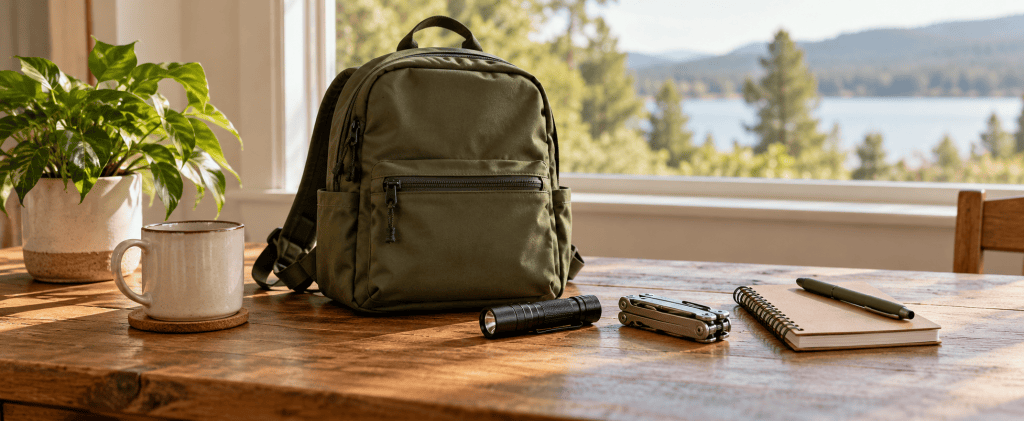
A compact flashlight is one of the most useful items you can add to an everyday carry kit. It can help during a power outage, while looking under a car seat, walking through a dark parking area, checking equipment, or handling a roadside problem at night.
Most cellphones include a flashlight, but using it consumes the phone’s battery and can make the phone awkward to hold while completing a task. A separate flashlight lets you aim the light without tying up your phone. Durability and runtime vary by model, battery, and brightness setting.
With so many flashlights available, choosing one can be confusing. Brightness is important, but it is not the only feature that matters. Size, battery type, controls, durability, and expected use should also influence your decision.
Decide How You Will Use the Flashlight
Begin by thinking about where the flashlight will be kept and how it will be used.
A flashlight carried in a pocket should be small and lightweight. One kept in a vehicle can be slightly larger and may benefit from longer battery life. A flashlight used around the house should be easy for everyone in the household to operate.
Common uses include:
- Finding dropped items
- Walking through dark areas
- Looking inside cabinets or under furniture
- Checking a vehicle at night
- Handling a power outage
- Reading house numbers or signs
- Completing small repairs
- Illuminating a campsite or walking path
Choose a flashlight for the tasks you are most likely to encounter rather than buying the brightest model available.
Understand Flashlight Brightness
Flashlight brightness is measured in lumens. A higher lumen number generally means more light, but more brightness can also use the battery faster and produce additional heat.
For close-range tasks, a lower setting may be all you need. A brighter setting can help when walking outside or looking farther into the distance.
A practical everyday flashlight should offer more than one brightness level. This allows you to use a low setting for simple tasks and reserve the highest setting for situations requiring more light.
Do not assume that the flashlight with the largest advertised lumen number is automatically the best. Some inexpensive products make exaggerated brightness claims. Dependability and useful runtime are often more important than maximum output.
Consider the Beam Pattern
Two flashlights with similar brightness ratings can produce very different types of light.
A wide or flood-style beam illuminates a larger nearby area. It works well for walking, working around the house, and looking inside a vehicle.
A focused or throw-style beam sends light farther into the distance. It may be helpful for viewing objects across a yard or along a dark road.
For general everyday use, a balanced beam that provides both nearby coverage and some distance is usually the most practical choice.
Choose a Battery Type
Compact flashlights commonly use one of three power options.
Built-In Rechargeable Battery
These flashlights are charged by connecting a cable directly to the light. They are convenient and eliminate the need to continually purchase batteries.
Look for a common charging connection, such as USB-C. Remember to recharge the flashlight regularly, especially if it is stored in a vehicle or emergency kit.
Replaceable Rechargeable Battery
Some flashlights use a rechargeable battery that can be removed and replaced. This may extend the useful life of the flashlight because the battery can be replaced when it eventually wears out.
Only use batteries and chargers recommended by the manufacturer.
Disposable Batteries
Flashlights powered by common AA or AAA batteries are easy to refill when replacement batteries are available. They can be useful for emergency kits because spare batteries can be stored nearby.
Remove old or leaking batteries and inspect stored flashlights regularly.
Look at Runtime, Not Just Brightness
Advertised runtime estimates how long a flashlight provides light under the manufacturer’s test conditions. It does not necessarily mean the light maintains the same brightness throughout that time. Some models automatically reduce brightness on high settings to manage heat or conserve battery power.
Manufacturers may advertise a long runtime based on the flashlight’s lowest setting. The highest setting will usually operate for a much shorter period.
When comparing flashlights, look for runtime information for several brightness levels. A useful everyday light should provide enough operating time for the situations in which you expect to use it.
Select a Comfortable Size
A flashlight is only useful if you are willing and able to carry it.
A pocket flashlight should be:
- Small enough to carry comfortably
- Light enough that it does not become a burden
- Large enough to hold securely
- Easy to find inside a bag
- Simple to operate with one hand
People with limited hand strength or arthritis may prefer a slightly larger flashlight with a prominent button. Very small switches and complicated controls can be frustrating during an emergency.
A pocket clip or wrist strap may help prevent the flashlight from being dropped or lost.
Keep the Controls Simple
Some flashlights offer numerous brightness levels, flashing patterns, and programmable settings. These features can be helpful, but they may also make the flashlight unnecessarily complicated.
For most people, a useful everyday flashlight needs:
- A dependable on-and-off switch
- A low or medium setting
- A brighter setting
- Controls that are easy to find in the dark
If you must repeatedly press the button to reach the setting you need, the flashlight may not be the right choice for everyday use.
A flashing or strobe setting should never activate accidentally during normal operation.
Check Durability and Water Resistance
An everyday flashlight may be dropped, carried in the rain, or stored in a vehicle. Look for a sturdy body, secure battery compartment, and some level of water resistance.
Manufacturers may use an IP rating to describe protection from water and dust. A flashlight does not necessarily need to be completely waterproof, but basic protection from rain and splashes is valuable.
Water resistance can decrease as seals wear out, so inspect the flashlight occasionally and follow the manufacturer’s care instructions.
Think About Vehicle Storage
A flashlight kept in a vehicle is exposed to changing temperatures. Heat and extreme cold can affect batteries and electronic equipment.
Check a vehicle flashlight regularly and follow the manufacturer’s storage recommendations. Do not leave a damaged or swollen rechargeable battery in the vehicle.
Store the flashlight somewhere secure and easy to reach. A glove compartment, center console, or vehicle emergency bag may be appropriate, depending on the flashlight and battery type.
Important Safety Considerations
Even a compact flashlight can produce intense light.
Follow these basic precautions:
- Never shine a bright flashlight directly into someone’s eyes.
- Keep it away from young children unless supervised.
- Do not use damaged or swollen rechargeable batteries.
- Use the correct charging cable and power source.
- Do not cover the flashlight while it is operating on a high setting.
- Stop using it if it becomes unusually hot, damaged, or wet inside.
A flashlight is a tool, and it should be used responsibly.
Compact Flashlight Buying Checklist
Before choosing a flashlight, ask:
- Is it comfortable to carry and hold?
- Are the controls simple?
- Does it offer more than one useful brightness level?
- Is the beam suitable for my needs?
- What type of battery does it use?
- How is it recharged?
- How long does it operate on normal settings?
- Is it water-resistant?
- Does it have a pocket clip or wrist strap?
- Does the manufacturer provide clear specifications and instructions?
Final Thoughts
The best compact flashlight is not necessarily the smallest, brightest, or most expensive model. It is the one that is dependable, comfortable to carry, easy to operate, and appropriate for your daily routine.
Decide how you will use the light, select a convenient battery system, and choose simple controls. Once you have made your choice, keep the flashlight charged and test it regularly.
A reliable compact flashlight is a small addition to an everyday carry kit, but it can make a meaningful difference when you need light quickly.
Gear Up Daily helps you carry smart and stay prepared.

