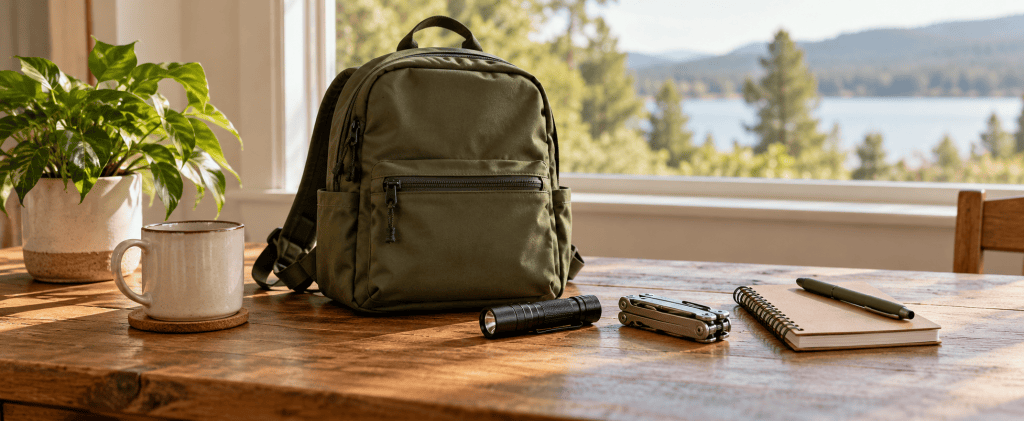
Building an everyday carry kit does not mean filling a large backpack with survival equipment. A practical EDC kit contains a small number of useful items selected for your normal routine.
The best approach is to start with items you already own, identify what is missing, and make improvements gradually. This keeps the kit affordable, lightweight, and easy to use.
Step 1: Think About Your Normal Day
Before purchasing anything, consider where you go and what you do during an average day.
Ask yourself:
- Do I spend a lot of time driving?
- Do I walk or use public transportation?
- Am I frequently away from an electrical outlet?
- Do I need to carry medication?
- Have I recently needed a flashlight, pen, charger, or simple tool?
- Do I carry everything in my pockets, or do I use a bag?
Your answers will determine what belongs in your kit. Someone who drives regularly may keep emergency supplies in the car, while someone who walks frequently will probably want a smaller and lighter kit.
Step 2: Begin With What You Already Carry
Place the items you normally carry on a table. These may include:
- Cellphone
- Wallet
- Keys
- Eyeglasses
- Medication
- Watch
- Pen
- Charging cable
This is the beginning of your everyday carry kit. You may discover that you already have most of what you need.
Check the condition of each item. Remove old receipts and unnecessary cards from your wallet, replace damaged charging cables, and make sure emergency contact information is current.
Step 3: Add a Compact Flashlight
Most cellphones have a flashlight, but a separate compact flashlight can still be useful. It saves your phone’s battery and is easier to hold while checking under a seat, walking through a dark area, or dealing with a power outage.
Look for a flashlight that is:
- Small enough to carry comfortably
- Simple to turn on and operate
- Bright enough for common tasks
- Rechargeable or powered by readily available batteries
- Made well enough for regular use
- Water-resistant if it may be used outdoors
The largest or brightest flashlight is not always the best choice. For everyday use, convenience and dependability are usually more important than maximum brightness.
Step 4: Include a Way to Charge Your Phone
A dead cellphone can become a serious inconvenience, especially when you need directions, emergency assistance, or access to important information.
Your kit might include:
- A dependable charging cable
- A wall charger
- A vehicle charger
- A small portable power bank
If you use a power bank, recharge it regularly. Carrying an empty power bank provides no benefit. Check it once a month or choose a regular day to recharge it.
Step 5: Consider a Small Multi-Tool
A compact multi-tool can help with loose screws, small packages, minor adjustments, and other ordinary tasks.
Choose one containing tools you are likely to use. Common options include:
- Pliers
- Screwdrivers
- Scissors
- Bottle opener
- File
- Small blade
More tools are not necessarily better. Additional features add weight and may make the tool difficult to carry.
Before carrying any tool with a blade, check the rules for your workplace, schools, government buildings, sporting venues, and other locations you visit.
Step 6: Add Personal and Emergency Information
A simple emergency contact card can be extremely valuable. It may include:
- Your name
- An emergency contact and telephone number
- Important medical conditions
- Medication information
- Allergies
- Your doctor’s contact information
Keep this information current and protect sensitive details appropriately. Avoid listing information that is not necessary for an emergency.
If you take medication, carry it in its original labeled container whenever possible and follow your healthcare provider’s instructions.
Step 7: Include a Few First-Aid Basics
An everyday kit does not need a complete medical bag. A few basic supplies may be enough for minor situations.
Consider carrying:
- Adhesive bandages
- Antiseptic wipes
- A small packet of gauze
- Hand sanitizer
- Disposable gloves
Replace anything that has been used, damaged, or expired. Serious injuries require professional medical assistance; a small EDC kit is intended only for basic, temporary care.
Step 8: Choose How to Carry Everything
Some people can fit their essential items into their pockets. Others may prefer:
- A small zippered pouch
- A purse or shoulder bag
- A compact backpack
- A briefcase or work bag
- A vehicle organizer
Choose something comfortable and easy to access. Frequently used items should not be buried at the bottom of the bag.
Keep heavier items close to your body when using a backpack. Separate sharp tools, medication, and electronic equipment so they cannot damage one another.
Step 9: Carry the Kit for Two Weeks
Use the kit during your normal routine for approximately two weeks. Pay attention to what happens.
Ask yourself:
- Which items did I use?
- Which items were unnecessary?
- Was the kit too heavy?
- Was anything difficult to find?
- Was there something I needed but did not have?
Remove unused items unless they serve a reasonable emergency purpose. Add only what solves an actual problem.
This testing period is one of the best ways to create a kit that fits your life instead of copying someone else’s equipment.
Step 10: Inspect the Kit Regularly
An everyday carry kit needs occasional attention. Once a month:
- Recharge batteries and power banks
- Check flashlights
- Replace expired first-aid supplies
- Update emergency information
- Inspect cables for damage
- Remove unnecessary items
- Clean the bag or pouch
A small amount of maintenance helps ensure that everything works when needed.
A Simple Starter Kit
A practical beginner’s kit might contain:
- Cellphone
- Wallet and identification
- Keys
- Compact flashlight
- Charging cable or small power bank
- Pen
- Emergency contact card
- A few first-aid supplies
- Compact multi-tool, where permitted
You do not need to purchase everything at once. Begin with what you own and add one carefully selected item at a time.
Final Thoughts
A useful everyday carry kit should be personal, practical, and affordable. It should help you stay organized and handle common problems without creating extra weight or complication.
Start small, test the kit during your normal routine, and make changes based on actual experience. The goal is not to carry more gear. The goal is to carry the right gear.
Gear Up Daily is here to help you carry smart and stay prepared.

