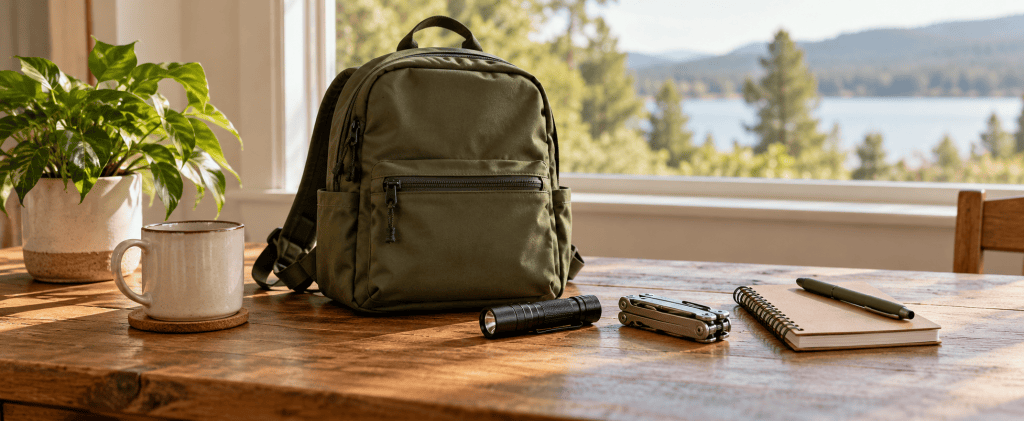
Most of us carry several useful items every time we leave home. A wallet, keys, cellphone, and perhaps a pocketknife or small flashlight may already be part of your daily routine. Together, these items are commonly called your “everyday carry,” or EDC.
Everyday carry is not about preparing for the end of the world or filling your pockets with expensive gadgets. It is simply about carrying a few practical items that help you handle ordinary problems safely and conveniently.
The goal of Gear Up Daily is to help people choose useful gear without making everyday carry complicated or unnecessarily expensive.
What Does EDC Mean?
EDC stands for “everyday carry.” It refers to the items you regularly carry in your pockets, purse, backpack, briefcase, or vehicle.
Everyone’s everyday carry will be different. A person working in an office may need different items than someone who works outdoors. A frequent traveler may place more importance on charging equipment and organization, while a homeowner may find a flashlight and compact multi-tool more useful.
The best EDC kit is not the one with the most items. It is the one that fits your daily routine.
Why Is Everyday Carry Useful?
Small problems happen all the time. Your phone battery may run low, you may need additional light to find something under a car seat, or a loose screw may need tightening. Having one useful item nearby can sometimes prevent a minor inconvenience from becoming a larger problem.
A sensible everyday-carry kit can help you:
- Keep important personal items organized
- Handle minor repairs
- See more clearly in dark or poorly lit areas
- Keep your phone charged
- Carry identification and emergency information
- Manage small cuts or scrapes
- Feel more confident while traveling
EDC gear should make life easier. If an item is too heavy, difficult to use, or rarely needed, it may not belong in your everyday kit.
Common Everyday-Carry Items
A basic EDC setup might include:
- Cellphone
- Wallet or identification holder
- Keys
- Compact flashlight
- Charging cable
- Portable power bank
- Pen and small notebook
- Pocket-size multi-tool
- Personal medication
- Emergency contact card
- A few basic first-aid supplies
You do not need everything on this list. Begin with the items you already use and add something only when it solves a genuine need.
Before carrying a pocketknife or bladed multi-tool, check the rules for your workplace, public buildings, and the locations you visit.
Start With Your Daily Routine
Before buying any new gear, think about a normal day.
Where do you go? What do you already carry? What small problems do you encounter regularly? Do you frequently need a charging cable, flashlight, pen, or simple tool?
Your answers will help you avoid buying gear that looks interesting but never gets used.
Someone who spends a lot of time driving might keep a flashlight, phone charger, first-aid kit, and emergency supplies in the vehicle. Someone who walks frequently may prefer lightweight items that fit comfortably in a pocket or small bag.
Choose Practical Gear
Consider these five questions before adding something to your everyday carry:
- Will I actually use it?
An item should solve a problem you reasonably expect to encounter. - Is it easy to carry?
Useful gear becomes less helpful when it is too large or heavy. - Is it simple to operate?
Emergency equipment should not require complicated instructions. - Is it dependable?
A flashlight, charger, or tool should work when you need it. - Can I afford it?
An effective EDC kit does not need to be expensive. Start with the basics and improve individual items over time.
Avoid Carrying Too Much
One of the most common beginner mistakes is buying too many gadgets at once. This can leave you with heavy pockets, an overcrowded backpack, and equipment you rarely use.
Begin with three or four essential items. Carry them for a few weeks and notice what you use. Remove anything that adds weight without providing real value.
You should also inspect your gear occasionally. Recharge batteries, replace expired medication or first-aid supplies, and make sure important contact information is current.
Everyday Carry Should Be Personal
EDC is not a competition. You do not need the largest flashlight, the most expensive multi-tool, or an enormous survival bag.
Your everyday carry should match your health, work, budget, location, and daily activities. The right equipment is whatever helps you stay organized, solve common problems, and feel better prepared.
Final Thoughts
Everyday carry begins with a simple question: “What small items would make my normal day easier or safer?”
Start with what you already own. Add new gear slowly and choose each item for a practical reason. Over time, you can build an affordable everyday-carry kit that works for your particular needs.
Gear Up Daily will provide straightforward guides, comparisons, checklists, and product information to help you carry smart and stay prepared.

