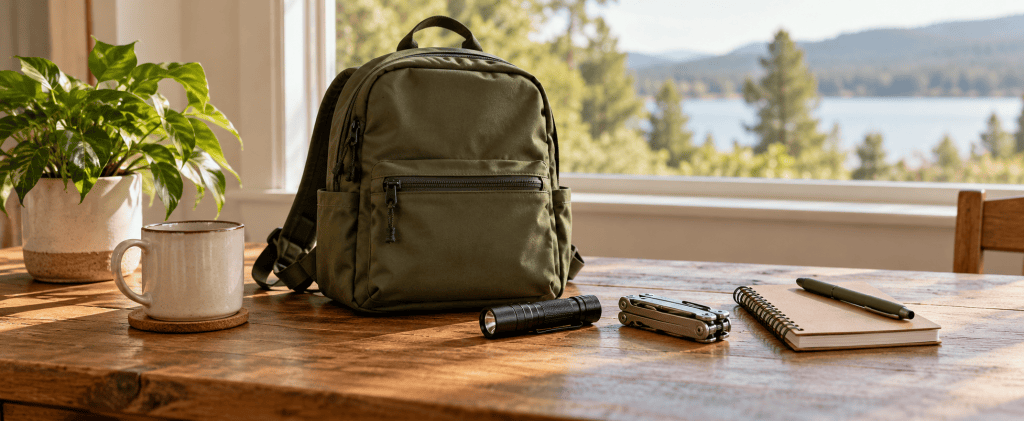
A backpack can carry everyday essentials, work equipment, electronics, travel clothing, or emergency supplies while keeping your hands free. However, a backpack that works well for one person may be uncomfortable or poorly organized for someone else.
The right choice depends on how you plan to use it, what you need to carry, and how much weight you can comfortably manage.
Before purchasing a backpack, look beyond its appearance. Comfort, size, organization, materials, zippers, security, and weight are more important than fashionable colors or an unusually long list of features.
Decide How You Will Use It
Begin by identifying the backpack’s main purpose.
An everyday backpack may carry:
- Wallet and keys
- Cellphone and charging equipment
- Medication
- Flashlight
- Water bottle
- Notebook and pens
- Small first-aid kit
- Lunch or personal items
A work backpack may need padded protection for a laptop, documents, and electronic accessories.
A travel backpack may need room for clothing, toiletries, identification, and other items required for several days away from home.
Trying to make one backpack handle every possible situation can result in something too large and heavy for daily use. Choose the bag for its most frequent purpose.
Choose an Appropriate Size
Backpack capacity is commonly measured in liters. The measurement provides a general idea of how much the bag can hold, but backpacks with the same listed capacity may be shaped and organized differently.
As a general starting point:
- A smaller backpack may work for everyday essentials.
- A medium-size backpack may handle work equipment or a short trip.
- A larger backpack may provide more travel space but can become heavy when filled.
Do not automatically purchase the largest option. Extra room often encourages people to carry unnecessary items.
For airline travel, check the exact carry-on or personal-item dimensions allowed by the airline. Rules vary, and an expandable backpack may meet the limit when empty but exceed it after being packed.
Consider the Empty Weight
The backpack’s weight before anything is placed inside is easy to overlook.
Heavy fabric, thick padding, metal hardware, additional compartments, wheels, or special compression systems can increase the empty weight. Once clothing, electronics, and other gear are added, the bag may become uncomfortable.
Compare both capacity and empty weight. A lighter backpack is often easier to carry, especially for older adults, travelers, and anyone with back, neck, shoulder, or balance concerns.
Look for Comfortable Shoulder Straps
Shoulder straps should distribute weight without digging into the shoulders.
Helpful features may include:
- Adequate padding
- Adjustable length
- A shape that follows the body
- Breathable material
- Strong attachment points
- A sternum strap
A sternum strap connects the shoulder straps across the chest and can help keep them from sliding outward. It should be adjustable and comfortable rather than restrictive.
Larger backpacks may include a waist belt to transfer some weight away from the shoulders. A thin decorative strap will not provide the same support as a properly designed padded belt.
Check the Back Panel
The section resting against your back affects comfort, stability, and airflow.
Look for:
- Moderate padding
- Breathable or ventilated material
- A shape that sits comfortably
- No hard objects pressing through the fabric
- Enough structure to prevent sagging
Very thick padding may feel comfortable at first but can add heat and weight. The goal is a stable fit that does not create pressure points.
People with back or mobility limitations should be particularly careful about weight and fit. When possible, try on the backpack with a small amount of weight before deciding whether it is comfortable.
Examine the Organization
A useful backpack should make important items easy to locate.
Helpful compartments may include:
- Main storage compartment
- Padded laptop or tablet sleeve
- Small pocket for keys and wallet
- Separate area for charging cables
- Exterior water-bottle pocket
- Quick-access pocket
- Internal zippered pocket
- Document sleeve
More compartments are not always better. Too many small pockets can make it difficult to remember where items were placed.
Think about what you normally carry and choose an organization system that matches those items.
Check the Main Opening
Backpacks open in different ways.
A traditional backpack usually opens from the top. This design can work well for everyday items but may require removing everything above an item stored at the bottom.
A clamshell backpack opens more like a suitcase. This can make clothing and travel items easier to pack and reach.
Some backpacks offer both top access and a larger zippered opening. Choose the style that is easiest for you to operate and organize.
Inspect the Materials and Stitching
A backpack does not need to be extremely heavy to be durable. Pay attention to how it is constructed.
Check:
- Fabric thickness and feel
- Stitching around the shoulder straps
- Reinforcement at stress points
- Quality of handles
- Zipper operation
- Interior lining
- Bottom-panel construction
The shoulder-strap connections and carrying handle receive considerable stress. Loose threads, uneven stitching, or weak attachment points may indicate poor construction.
A reinforced bottom can help protect the contents when the backpack is placed on the ground.
Understand Water Resistance
“Water-resistant” and “waterproof” do not mean the same thing.
A water-resistant backpack may protect its contents from light rain or brief exposure to moisture. It may not keep everything dry during heavy rain or if submerged.
Water can enter through:
- Zippers
- Seams
- Open pockets
- Charging-port openings
- Worn fabric
If electronics, medication, or documents must remain dry, place them in protective sleeves or sealed bags. A separate rain cover may also provide additional protection.
Do not assume that a backpack is completely waterproof unless the manufacturer clearly explains the level of protection.
Look at Zippers and Hardware
Zippers are among the most frequently used parts of a backpack.
Test whether they:
- Move smoothly
- Have pulls that are easy to grip
- Avoid catching the surrounding fabric
- Appear securely stitched
- Open wide enough for convenient access
Small zipper pulls may be difficult for people with limited hand strength. Larger pulls or added zipper cords can make the bag easier to operate.
Buckles and adjustment hardware should feel secure without being unnecessarily difficult to release.
Consider Security Features
Some travel backpacks offer:
- Zippers that can accept a small lock
- Hidden pockets
- Interior pockets for valuables
- Cut-resistant material
- RFID-blocking pockets
These features may discourage casual theft, but no backpack is completely theft-proof.
Keep money, identification, and important medication where you can monitor them. Do not place irreplaceable valuables in an easily opened exterior pocket.
A small lock may prevent a zipper from being opened casually, but it cannot protect a bag that is left unattended.
Laptop and Electronics Protection
If you carry a laptop or tablet, look for a padded compartment that fits the device securely.
A good compartment should:
- Prevent excessive movement
- Separate the device from other items
- Include padding on both sides
- Keep the device away from the bottom of the bag
- Be easy to access when required
Avoid placing water bottles or leaking containers directly beside electronics. Use protective cases and organize charging cables so their connectors cannot scratch screens.
Water-Bottle Pockets
An exterior water-bottle pocket allows you to carry a drink without placing it beside electronics or documents.
Check that the pocket:
- Fits the bottle you normally use
- Holds it securely
- Is easy to reach
- Does not interfere with the zippers
- Has enough depth or elastic tension
A shallow pocket may allow the bottle to fall out when bending over or placing the backpack on a seat.
Expansion and Compression Features
Expandable backpacks provide additional room when needed. Compression straps can reduce bulk and help keep contents from shifting.
Some travel backpacks include vacuum-compression sections. These systems may reduce the space occupied by clothing, but they do not reduce its weight. Compressing more clothing into the bag can make it heavier and may cause it to exceed airline limits.
Before using an expansion or compression feature, check:
- Whether it is easy to operate
- Whether the zippers remain secure
- Whether a pump is required
- How much weight the additional items create
- Whether the packed dimensions remain acceptable for travel
Space-saving features are useful only when the backpack remains comfortable and within applicable size and weight limits.
Pack Heavy Items Carefully
How a backpack is loaded affects comfort.
Place heavier items close to your back and near the middle of the bag. Keep frequently used items where they are easy to reach. Avoid placing hard or sharp objects where they can press against your back.
Do not fill every available space simply because it is there. If the packed bag feels too heavy, remove nonessential items.
Lift the backpack carefully rather than swinging it onto one shoulder. Adjust both shoulder straps so the weight is carried evenly.
Everyday or Travel Backpack Buying Checklist
Before choosing a backpack, ask:
- What will I use it for most often?
- Is it the right size for those items?
- How much does it weigh when empty?
- Are the shoulder straps comfortable and adjustable?
- Does the back panel feel supportive?
- Is the organization simple and useful?
- Are the zippers easy to operate?
- Are stress points reinforced?
- Does it provide adequate weather protection?
- Will my laptop or tablet fit securely?
- Does the water-bottle pocket hold my bottle?
- Is the packed bag within airline limits?
- Can I comfortably carry it when fully loaded?
- Am I paying for features I will not use?
Final Thoughts
The best everyday or travel backpack is not necessarily the one with the most pockets, largest capacity, or longest feature list. It is the one that fits your body, protects your belongings, and organizes the items you genuinely need.
Decide how the backpack will be used, compare its empty weight and dimensions, inspect its construction, and consider how comfortable it will be when packed.
A well-chosen backpack should make carrying your gear easier, not encourage you to carry more than you can comfortably manage.
Gear Up Daily helps you carry smart and stay prepared.

