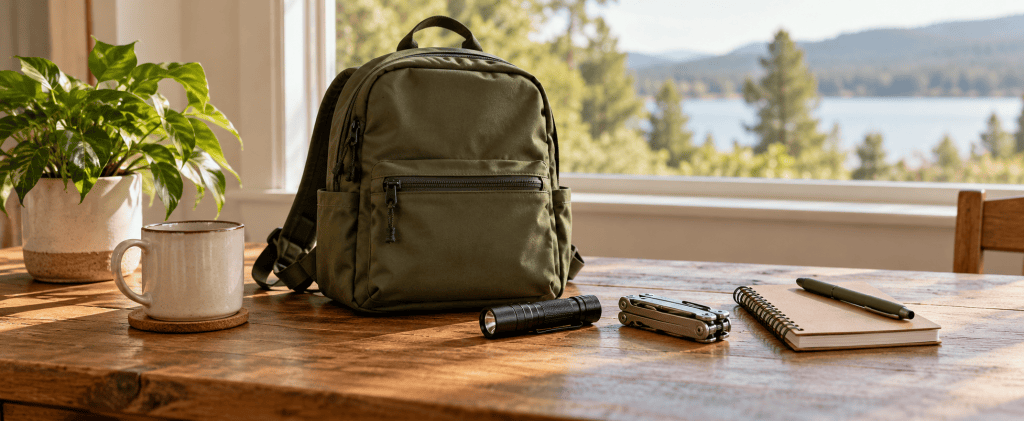
An everyday-carry backpack should help you find useful items quickly without becoming unnecessarily heavy or cluttered. A backpack may have plenty of space and numerous pockets, but it will not be convenient if you cannot remember where anything is stored.
Good organization begins with deciding what you genuinely need. After that, items can be grouped by purpose, frequency of use, weight, and safety.
The goal is not to fill every available compartment. The goal is to create a simple system that you can remember and maintain.
Begin by Emptying the Backpack
Place everything currently inside the backpack on a table. This makes it easier to see what you have been carrying.
Separate the contents into three groups:
- Items used regularly
- Items kept for a reasonable emergency
- Items rarely or never used
Return the first two groups to the backpack. Leave out unnecessary receipts, duplicate items, expired supplies, broken cables, and anything carried only because there was available space.
This first step can reduce the backpack’s weight and make the remaining contents easier to organize.
Create a Basic Inventory
Write down the items you plan to carry.
A simple everyday-carry backpack might contain:
- Wallet and keys
- Cellphone accessories
- Charging cable
- Portable power bank
- Compact flashlight
- Pen and notebook
- Personal medication
- Emergency contact information
- Small first-aid supplies
- Water bottle
- Eyeglasses or sunglasses
- Tissues or hand sanitizer
- Compact multi-tool, where permitted
Your list should reflect your daily routine. Do not copy someone else’s kit without considering whether those items are useful to you.
Keeping a written inventory also makes it easier to notice when something is missing.
Organize the Backpack into Zones
One effective method is to divide the backpack into several zones based on how the items are used.
Quick-Access Zone
Use an exterior or top pocket for frequently needed items such as:
- Keys
- Pen
- Tissues
- Eyeglass case
- Small notebook
- Hand sanitizer
Avoid placing valuable items in an exposed pocket that could be opened without your knowledge.
Electronics Zone
Keep charging equipment together in one compartment or small pouch.
This group may include:
- Charging cable
- Wall charger
- Vehicle charger
- Portable power bank
- Earbuds
- Cable adapters
Keeping electronics together prevents tangled cords and makes it easier to see whether anything is missing.
Personal and Medical Zone
Use a secure, clearly identified pocket or pouch for personal medical supplies.
This may include:
- Necessary medication
- Emergency contact card
- Allergy information
- Small first-aid kit
- Spare eyeglasses
- Hearing-aid batteries
Protect sensitive information and follow proper storage instructions for medication. Some medicines should not be left in a backpack exposed to extreme heat or cold.
Tools and Preparedness Zone
A separate compartment or pouch can hold items used for minor problems or emergencies, such as:
- Compact flashlight
- Spare batteries
- Multi-tool
- Reflective item
- Whistle
- Small roll of tape
Keep sharp tools closed and secured so they cannot damage the bag or injure someone reaching inside.
Main Storage Zone
The main compartment can hold larger items such as:
- Light jacket
- Lunch
- Documents
- Book
- Small umbrella
- Travel supplies
Use this space carefully. Large items should not block access to emergency or frequently used equipment.
Place Heavy Items Close to Your Back
Heavy items should generally be positioned close to the back panel and near the middle of the backpack.
This may include:
- Laptop
- Tablet
- Large power bank
- Filled water container
- Book
- Other dense equipment
Heavy objects placed far from your back can pull the backpack backward and make it feel less stable. Placing them too low may cause the bag to sag.
Use padded sleeves for electronics and make sure hard objects cannot press directly against your back.
Balance the Weight
Try to distribute weight evenly between the left and right sides. A heavily loaded side pocket can make the bag feel unbalanced.
After packing the backpack:
- Close all compartments.
- Lift the bag carefully.
- Put on both shoulder straps.
- Adjust the straps evenly.
- Walk around for a few minutes.
- Notice any pulling, pressure, or shifting.
If the backpack feels uncomfortable, remove unnecessary items or reposition the heavier contents.
Do not carry more weight simply because the backpack has additional room.
Use Small Pouches Carefully
Small zippered pouches can organize related supplies.
For example:
- Blue pouch for charging equipment
- Red pouch for first aid
- Clear pouch for personal-care items
- Small tool pouch for flashlight and multi-tool
Color coding or labels can make items easier to locate.
However, too many pouches can create another problem. If every item is hidden inside a separate container, you may spend more time opening and searching.
Use only enough pouches to keep related items together.
Protect Electronics
Store laptops and tablets in padded compartments. Keep charging cables loosely coiled rather than tightly folded, which may damage them over time.
Avoid placing:
- Water bottles beside electronics
- Sharp tools against screens
- Heavy objects on charging connections
- Loose metal items near exposed ports
If your backpack may be exposed to rain, place electronics in water-resistant sleeves or sealed protective bags. A water-resistant backpack does not guarantee that its contents will remain completely dry.
Keep Food and Liquids Separate
Food, drinks, and toiletries can leak or spill.
Use:
- Securely closed containers
- Exterior water-bottle pockets
- Sealed plastic bags
- Washable lunch containers
- Separate toiletry pouches
Do not store liquids directly above electronics, documents, medication, or first-aid supplies.
Clean spills promptly to prevent odors, stains, and damage.
Make Emergency Items Easy to Reach
Emergency supplies should not be buried under clothing or other belongings.
A flashlight, first-aid kit, emergency contact card, and necessary medication should be stored where they can be found quickly.
Tell a trusted family member or travel companion where your important medical information is located. A visible label inside the backpack may help another person find it during an emergency.
Do not display private medical or identification information on the outside of the bag.
Use the Same Location Every Time
Once you establish an organization system, return each item to the same location.
For example:
- Keys always go in the top pocket.
- Charging equipment always goes in the blue pouch.
- First-aid supplies always go in the red pouch.
- Flashlight always goes in the front compartment.
- Water bottle always goes in the side pocket.
Consistency makes the system easier to remember and reduces the chance of losing something.
Avoid Overpacking
A common mistake is preparing for every imaginable situation. This leads to a heavy backpack filled with items that are rarely used.
Ask these questions about each item:
- Have I used it recently?
- Does it solve a realistic problem?
- Is there a lighter alternative?
- Am I carrying duplicates?
- Could this remain in my vehicle or at home instead?
- Does its usefulness justify its weight?
Emergency supplies deserve special consideration, but they should still match the situations you are reasonably likely to encounter.
Conduct a Two-Week Test
Carry the organized backpack during your normal routine for two weeks.
Keep track of:
- Items you used
- Items you could not find quickly
- Items you did not use
- Anything you needed but did not have
- Areas of discomfort
- Supplies that shifted or leaked
At the end of the test, adjust the organization. Remove unnecessary items and relocate anything that was difficult to reach.
The best organization system develops through actual use.
Inspect the Backpack Monthly
Once a month:
- Empty loose debris.
- Remove receipts and unnecessary papers.
- Test the flashlight.
- Recharge the power bank.
- Inspect charging cables.
- Replace used or expired first-aid supplies.
- Review medication storage.
- Update emergency information.
- Clean food and water compartments.
- Check zippers, straps, and stitching.
This prevents clutter from gradually returning and helps ensure that important supplies remain usable.
Simple Organization Checklist
Before leaving home, confirm that:
- Frequently used items are easy to reach.
- Valuables are stored securely.
- Electronics are protected.
- Liquids are sealed and separated.
- Medication and emergency information are accessible.
- Sharp tools are closed and secured.
- Heavy items are close to your back.
- Weight is balanced between both sides.
- Nothing unnecessary has been added.
- The backpack is comfortable when worn.
Final Thoughts
Organizing an everyday-carry backpack does not require an elaborate system. Begin with the items you genuinely need, group related supplies, place heavy objects close to your back, and keep frequently used equipment accessible.
Return each item to the same place and review the backpack regularly. A well-organized bag saves time, reduces frustration, and helps you respond more effectively when you need something quickly.
A good everyday-carry backpack should not feel like a storage closet on your shoulders. It should be a practical and comfortable collection of useful items selected for your daily life.
Gear Up Daily helps you carry smart and stay prepared.

