A flat tire, dead battery, mechanical problem, traffic delay, or winter storm can leave a driver stranded without warning. A basic car emergency kit provides tools and supplies that can help you remain safe and comfortable while waiting for assistance.
You do not need to purchase an expensive kit containing dozens of unfamiliar gadgets. Begin with practical supplies, place them in a sturdy container, and adjust the kit for your vehicle, health, passengers, local weather, and travel habits.
For drivers in Michigan and other cold-weather states, winter supplies are especially important.
Communication and Personal Information
Your cellphone is one of the most valuable emergency tools in your vehicle. It allows you to call 911, roadside assistance, family members, or a towing company.
Keep the following in your vehicle:
- Cellphone charging cable
- Vehicle-compatible phone charger
- Written emergency contact information
- Roadside-assistance membership information
- Insurance information
- Vehicle registration
- Paper map of your regular travel area
A small power bank may provide backup power, but rechargeable batteries can be affected by extreme heat and cold. Inspect and recharge it regularly, and follow the manufacturer’s storage instructions.
Do not depend entirely on information stored in your phone. A written contact list can still be used if your battery dies or your phone is damaged.
Flashlight and Visibility Equipment
A flashlight can help you examine the vehicle, find supplies, signal for help, or move safely after dark.
Your kit should include:
- Dependable flashlight
- Spare batteries, if applicable
- Reflective warning triangles or emergency markers
- Reflective safety vest
- Help sign or brightly colored cloth
Reflective triangles do not require batteries and can alert approaching drivers. Place warning equipment only when it is safe to exit the vehicle. Never stand in an active traffic lane to position a marker.
Road flares are another option, but they create heat and flame. They require careful storage and use. Battery-powered or reflective warning devices may be easier and safer for many drivers.
Basic Roadside Tools
A few basic tools can help with common vehicle problems. Consider including:
- Jumper cables
- Portable jump starter
- Tire-pressure gauge
- Work gloves
- Basic tool kit
- Duct tape for temporary, minor uses
- Jack and lug wrench supplied for your vehicle
- Owner’s manual
Learn how to use the equipment before an emergency occurs. Jumper cables must be connected correctly to prevent injury or vehicle damage.
A portable jump starter can be convenient when another vehicle is unavailable, but it must be kept charged and stored according to its instructions.
Changing a tire beside heavy traffic can be extremely dangerous. If the vehicle is not in a safe location, remain in a protected place and call for professional roadside assistance.
First-Aid and Personal Supplies
A basic first-aid kit can help with minor injuries while you wait for medical assistance.
It might contain:
- Adhesive bandages
- Sterile gauze
- Medical tape
- Antiseptic wipes
- Disposable gloves
- Basic first-aid instructions
Check the kit regularly and replace used, damaged, or expired supplies.
Also consider the personal needs of everyone who normally travels in the vehicle:
- Necessary medication
- Eyeglasses
- Hearing-aid batteries
- Mobility-related supplies
- Infant supplies
- Pet food, water, leash, and other pet necessities
Medication can be damaged by extreme vehicle temperatures. Ask your pharmacist or healthcare provider how it should be stored rather than leaving temperature-sensitive medicine in the vehicle.
Food and Water
Nonperishable food and drinking water can be valuable during a long delay.
Appropriate foods may include:
- Protein or energy bars
- Nuts
- Dried fruit
- Crackers
- Other sealed foods that tolerate storage
Choose foods that are easy to open and appropriate for your dietary needs. Check expiration dates and replace the food periodically.
Keep drinking water available, but remember that containers can freeze during Michigan winters and deteriorate during extreme summer heat. Inspect and rotate stored water regularly.
Warmth and Weather Protection
Cold weather can quickly turn a roadside delay into a serious situation. Every Michigan vehicle should carry supplies for warmth during the winter.
Consider including:
- Blankets or sleeping bags
- Warm hat
- Extra gloves or mittens
- Extra socks
- Winter boots
- Warm outer layer
- Rain poncho
- Hand warmers
Store these items in a dry bag or sealed container. Include enough warmth for your regular passengers, not only the driver.
Snow and Ice Equipment
Winter driving requires several additional items:
- Ice scraper
- Snow brush
- Small shovel
- Sand or non-clumping cat litter for traction
- Winter-grade windshield-washer fluid
- Traction aids, if appropriate for your vehicle
Sand or cat litter may help provide traction when a tire is spinning on snow or ice. It cannot make an unsafe road suitable for travel, and it should not replace professional assistance when the vehicle is seriously stuck.
Clear all windows, mirrors, lights, and the roof before driving. Snow and ice left on the vehicle can reduce visibility and create a hazard for other motorists.
Keep the Vehicle Prepared
Emergency supplies are only one part of roadside preparation. Vehicle maintenance is equally important.
Regularly check:
- Tire pressure and tread
- Spare tire
- Battery
- Headlights and emergency flashers
- Windshield wipers
- Washer fluid
- Coolant
- Brakes
- Heating and defrosting systems
Cold temperatures can reduce tire pressure and battery performance. Check your vehicle more frequently during winter.
Try to keep the fuel tank at least half full during cold weather. Electric-vehicle drivers should maintain an adequate charge and understand how cold temperatures affect driving range.
How to Store the Kit
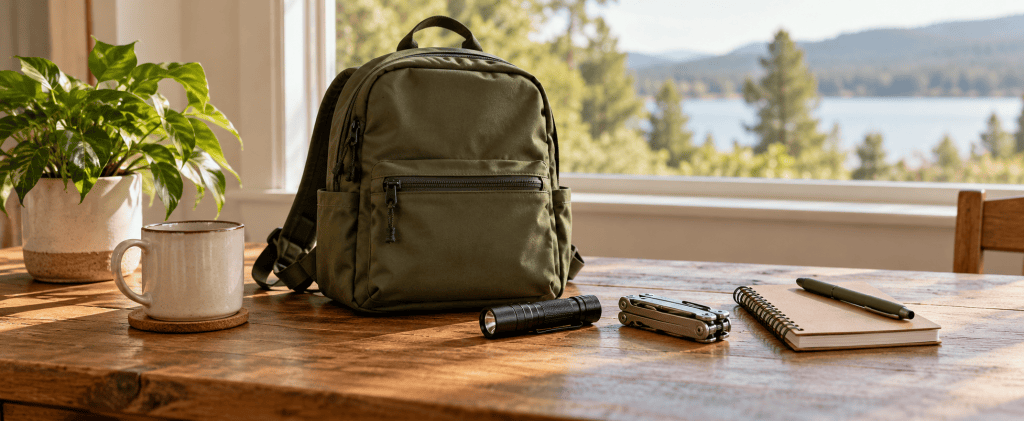
Place the supplies in a sturdy container, backpack, or organizer. The kit should be secure so it cannot move around during sudden stops.
Organize related items together:
- Tools in one pouch
- First-aid supplies in another
- Warm clothing in a dry bag
- Food and water in a separate container
- Flashlight and reflective equipment where they can be reached quickly
Do not bury the kit under luggage or other cargo. Some emergency supplies should be reachable without leaving the vehicle.
What to Do If You Become Stranded
If your vehicle stops, remain calm and evaluate your surroundings.
When possible:
- Move the vehicle away from active traffic.
- Turn on the emergency flashers.
- Call 911 for immediate danger or roadside assistance for a mechanical problem.
- Tell someone your location and situation.
- Stay with the vehicle during severe winter weather when that is the safest choice.
- Make the vehicle visible with emergency markers or a bright cloth.
- Avoid unnecessary physical exertion.
If snow surrounds the vehicle, make sure the exhaust pipe remains clear. A blocked exhaust can allow deadly carbon monoxide to enter the passenger area.
If you must run the engine for warmth while stranded in winter weather, run it for only 5–10 minutes each hour. Keep the exhaust pipe clear of snow, ice, and debris, check it periodically, and open a window slightly for ventilation. Never run a vehicle in a garage or other enclosed space. Carbon monoxide has no color or smell and can cause unconsciousness or death. Do not use candles, grills, camping stoves, or other flame-producing equipment inside the vehicle.
Inspect the Kit Twice a Year
Review the kit in the fall before winter and again in the spring.
During each inspection:
- Test the flashlight.
- Replace weak or expired batteries.
- Recharge the jump starter and power bank.
- Replace expired food and first-aid supplies.
- Inspect stored water.
- Confirm that warm clothing still fits.
- Update contact and insurance information.
- Check the spare tire and roadside tools.
- Add supplies needed by new passengers or pets.
Place a reminder on your calendar so the inspection is not forgotten.
Basic Car Emergency Kit Checklist
A practical starter kit should include:
- Cellphone charger
- Flashlight
- Reflective triangles or emergency markers
- Reflective safety vest
- Jumper cables or charged jump starter
- Tire-pressure gauge
- Work gloves
- Basic tools
- First-aid kit
- Drinking water
- Nonperishable food
- Blanket
- Emergency contact information
- Paper map
For winter, add:
- Ice scraper and snow brush
- Small shovel
- Sand or non-clumping cat litter
- Warm hat and gloves
- Extra socks and boots
- Additional blankets or sleeping bags
- Hand warmers
- Winter-grade washer fluid
Final Thoughts
A basic car emergency kit does not need to be complicated or expensive. Start with communication, visibility, warmth, first aid, and a few dependable roadside tools. Add supplies gradually and learn how to use them before an emergency occurs.
The right kit will depend on your health, vehicle, passengers, location, and season. For Michigan drivers, preparing for cold temperatures, snow, and ice should be a priority.
A well-maintained vehicle and an organized emergency kit cannot prevent every roadside problem, but they can help you remain safer and more comfortable while assistance is on the way.
Gear Up Daily helps you carry smart and stay prepared.

