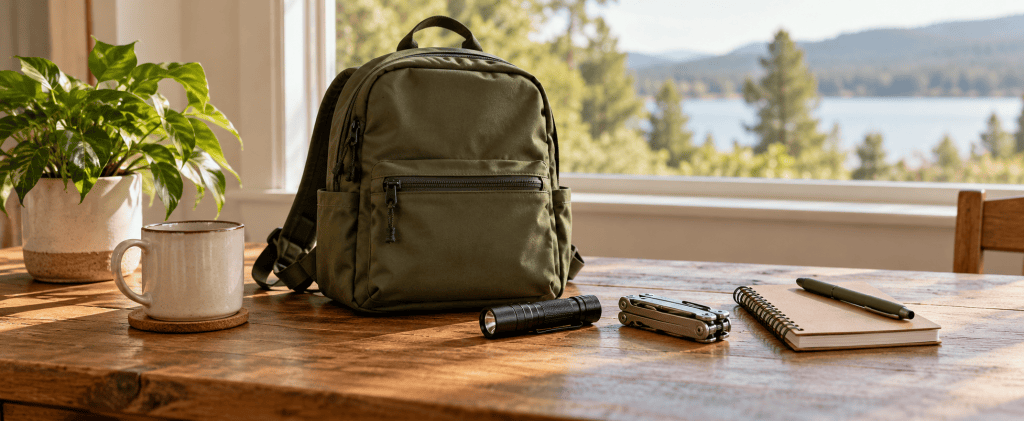
Everyday carry is personal at every age. Older adults do not all have the same health, mobility, or daily routines, so there is no single kit that will work for everyone.
A useful kit should support independence without adding unnecessary weight or complication. It may include communication equipment, identification, medication information, vision or hearing supplies, and a few practical tools.
The goal is not to prepare for every possible emergency. It is to carry a manageable collection of items that can help with common needs and unexpected delays.
Begin With Your Daily Routine
Before adding anything to your pockets, purse, or backpack, think about a normal day.
Ask yourself:
- Where do I usually go?
- How long am I normally away from home?
- Do I drive, walk, or use public transportation?
- Do I use a cane, walker, wheelchair, or another mobility aid?
- Do I need medication while away from home?
- Do I depend on eyeglasses or hearing aids?
- What small problems have I experienced recently?
- How much weight can I comfortably carry?
Your answers will help determine what belongs in your everyday kit.
Someone taking a brief trip to a nearby store may need only a few essentials. Someone attending appointments or traveling farther from home may need additional supplies.
Cellphone and Charging Equipment
A cellphone can provide communication, directions, emergency alerts, medical information, and access to family members.
Consider carrying:
- Charged cellphone
- Correct charging cable
- Compact wall charger
- Small portable power bank
- Vehicle charger if you drive
Make sure emergency contacts are saved in the phone and can be found easily.
Some phones allow emergency information to be viewed from the locked screen. This may include an emergency contact, medical conditions, allergies, and medications. Review your phone’s instructions and include only the information you are comfortable sharing.
A phone is valuable, but it should not be your only source of important information.
Written Emergency Contact Card
Carry a small card containing essential contact information.
It may include:
- Your name
- Emergency contact’s name
- Emergency contact’s telephone number
- Important medical conditions
- Medication allergies
- Doctor or healthcare-system telephone number
Do not include your Social Security number, financial account information, passwords, or other details that are unnecessary during an emergency.
Keep the card in a consistent and reasonably easy-to-find location. Tell a trusted family member or companion where it is stored.
Identification and Payment
Carry only the identification and payment methods needed for the day.
These may include:
- Driver’s license or state identification
- Health-insurance card
- One payment card
- Small amount of cash
- Roadside-assistance card, if applicable
Avoid carrying unnecessary cards or documents. Make copies of important information and store those copies securely at home rather than keeping everything in your wallet.
If your wallet is lost, report missing identification and payment cards promptly.
Medication and Health Information
If you need medication while away from home, carry it according to your healthcare provider’s or pharmacist’s instructions.
Consider keeping a current medication list containing:
- Medication names
- Dosages
- Times taken
- Allergies
- Pharmacy contact information
Do not change your medication schedule or dosage based on general online advice.
Some medications must be protected from heat, cold, moisture, or direct sunlight. Ask your pharmacist how your medications should be carried and whether they should remain in their original labeled containers.
Review the medication list whenever a prescription changes.
Eyeglasses and Vision Supplies
People who depend on corrective lenses should consider carrying:
- Eyeglasses
- Protective eyeglass case
- Lens-cleaning cloth
- Sunglasses
- Small magnifying glass, if useful
Keep eyeglasses in a secure location where they will not be crushed by heavier items.
A compact flashlight can also make labels, steps, keyholes, and dark areas easier to see.
Hearing Equipment
If you use hearing aids, your kit may include:
- Spare hearing-aid batteries
- Charging case
- Cleaning cloth
- Small protective container
- Written communication card, if helpful
Keep batteries and charging equipment dry. Store small batteries securely and away from children and pets.
Check the charge or battery level before leaving home, especially when attending an important appointment.
Compact Flashlight
A separate flashlight can be more convenient than using a phone’s light. It can help with:
- Finding items in a bag
- Reading in poor lighting
- Walking through a dark parking area
- Locating a keyhole
- Managing a power outage
- Signaling for assistance
Choose a model with a large, easy-to-find switch and simple controls. Extremely small buttons or complicated operating patterns may be difficult to use.
Keep the flashlight charged and test it monthly.
Whistle or Personal Alert Device
A whistle or personal alarm can help attract attention if you fall, feel threatened, or need assistance.
Choose something that is:
- Easy to reach
- Simple to activate
- Loud enough to attract attention
- Difficult to activate accidentally
A personal alert device or medical-alert system may offer additional protection for some individuals. Compare the costs, coverage, charging requirements, and limitations before subscribing to a service.
These devices do not replace calling 911 when immediate emergency assistance is needed.
Basic First-Aid Supplies
A small everyday kit may contain:
- Adhesive bandages
- Sterile gauze
- Medical tape
- Antiseptic wipes
- Disposable gloves
- Tissues
- Hand sanitizer
This is intended for minor situations, not serious injuries. Seek professional medical assistance when necessary.
If you take blood thinners, have a bleeding disorder, have allergies, or have another condition affecting first-aid needs, ask your healthcare provider what supplies and instructions are appropriate for you.
Replace used, damaged, or expired items.
Water and a Small Snack
A small bottle of water and an appropriate snack may be useful during a delayed appointment, long trip, or unexpected wait.
Possible snacks include:
- Crackers
- Nuts
- Protein bar
- Dried fruit
- Another item suitable for your dietary needs
Anyone with diabetes, swallowing difficulties, fluid restrictions, food allergies, or another dietary concern should follow guidance from their healthcare provider.
Make sure containers are securely closed and keep liquids away from medication, documents, and electronics.
Weather Protection
Conditions can change while you are away from home.
Depending on the season, consider carrying:
- Lightweight rain poncho
- Compact umbrella
- Warm hat
- Gloves
- Extra socks
- Sunglasses
- Sunscreen
- Light sweater or jacket
Do not overload your daily bag with an entire wardrobe. Check the forecast and carry only what the conditions reasonably require.
Choose the Right Bag
The bag should be easy to carry and should not interfere with a cane, walker, or other mobility aid.
Possible options include:
- Small backpack
- Lightweight shoulder bag
- Crossbody bag
- Purse with secure compartments
- Bag designed to attach safely to a mobility device
Look for:
- Low empty weight
- Comfortable straps
- Simple zippers
- Large zipper pulls
- Easy-to-reach compartments
- A light-colored interior that makes items easier to see
- Reflective material for visibility
- Enough structure to keep contents organized
A bag that is too large encourages overpacking. Choose the smallest size that comfortably holds the items you genuinely need.
If attaching a bag to a walker, wheelchair, or scooter, follow the equipment manufacturer’s instructions. Improperly placed weight can affect stability.
Keep the Weight Manageable
An overloaded bag can cause discomfort and may affect posture or balance.
To reduce weight:
- Carry smaller versions of supplies.
- Remove duplicate items.
- Leave rarely used equipment at home or in the vehicle.
- Avoid carrying a large amount of loose change.
- Choose lightweight containers.
- Review the contents regularly.
Put heavier items close to your body and distribute the weight evenly.
If carrying the bag causes pain, instability, numbness, or unusual fatigue, reduce the load and discuss the concern with an appropriate healthcare professional.
Keep Important Items Accessible
Frequently used and emergency items should not be buried at the bottom of the bag.
Use the same location every time:
- Phone in one pocket
- Medication in a secure medical pouch
- Emergency card in the wallet
- Flashlight in an easy-to-reach compartment
- Charging equipment in a small pouch
- Keys attached to a clip or stored in a designated pocket
A consistent system reduces searching and makes it easier for someone else to help during an emergency.
Protect Your Privacy
Preparedness information should be useful without exposing unnecessary personal details.
Do not carry:
- Written passwords
- Social Security card unless specifically needed
- Complete financial records
- Unnecessary account numbers
- Large amounts of cash
- Unsecured copies of sensitive documents
If you use a medical identification bracelet or card, include only relevant information. Ask a healthcare professional what medical details would be most helpful in an emergency.
A Simple Starter Kit
A practical everyday-carry kit for an older adult might contain:
- Charged cellphone
- Charging cable or small power bank
- Identification and health-insurance card
- Emergency contact card
- Current medication list
- Necessary medication stored correctly
- Eyeglasses or hearing-aid supplies
- Compact flashlight
- Whistle or personal alert device
- A few first-aid supplies
- Small bottle of water
- Appropriate snack
- Weather-related item
- Keys and one payment method
Not everyone needs every item. Select only what fits your health, routine, and comfort.
Test the Kit for Two Weeks
Carry the kit during your normal routine and pay attention to:
- Which items you use
- Which items are difficult to find
- Whether the bag feels too heavy
- Whether the zippers and controls are easy to operate
- Whether the bag interferes with walking or a mobility aid
- What you needed but did not have
Make changes based on actual experience.
Review the Kit Monthly
Once a month:
- Recharge the phone accessories and power bank.
- Test the flashlight and alert device.
- Review medication and emergency information.
- Replace expired first-aid supplies and snacks.
- Inspect eyeglass and hearing-aid supplies.
- Remove unnecessary items.
- Check the bag’s straps, zippers, and attachment points.
- Confirm that the total weight remains comfortable.
Update the kit whenever your health, medication, equipment, or daily routine changes.
Final Thoughts
A practical everyday-carry kit can support independence, communication, organization, and preparedness. It should be based on the individual—not simply on age.
Begin with communication, identification, medical information, and the personal items you depend on. Add lightweight tools that solve realistic problems, and avoid carrying equipment that creates discomfort or affects mobility.
The best kit is one you can carry comfortably, understand completely, and use confidently.
Gear Up Daily helps you carry smart and stay prepared.

